
back to insights & opinions

There has been much press coverage regarding wealthy Americans flocking to London following the election of Donald Trump as President, but the popularity of UK property among American buyers has been consistently high for a while.
A key reason for this is that the exchange rate has been in US buyers’ favour over the past few years, as the dollar has generally strengthened since 2021, sinking to almost parity with sterling following Liz Truss’ ill-fated Budget in September 2022. Many dollar buyers have taken advantage and over the past year in particular, a significant proportion of clients have been dollar-pegged – not just Americans but also buyers from Canada, Saudi Arabia and Hong Kong. While we have seen a slight scaling back of European buyers at the higher end of the market, dollar-pegged buyers make up a growing proportion of our client base. There have been surges of interest from Americans in the past but in 20 years of doing this job, I can’t recall quite so many buying as now.
As well as the currency play and shared language, the political situation in the US is a factor when deciding to buy UK property. There is a sense of disbelief that despite the US economy growing much faster than ours, so many underlying problems prevail. Many of our clients are from the cities and are disheartened by what is happening there. Those moving from San Francisco, Los Angeles, New York and Chicago say time and again that they have had enough of the opiate problems, significant crime levels and homelessness. While London is not without its own issues – most notably knife crime – guns are the exception rather than the rule, making London feel relatively safe and genteel in comparison.
For a long time, Americans being seconded to the UK for say, five years, would rent rather than buy because it worked out cheaper once stamp duty was factored into the cost of a purchase. They stayed long enough to put their children through the school system and were then off again. But as rents have soared ever higher that balance has tipped and there is a stronger argument for buying.
Some American buyers are exclusively school-driven, with a particular hotspot focused around St John’s Wood where the main American school in central London is based. They also gravitate towards the period character to be found in Kensington, Holland Park, Hampstead, Wimbledon and Chelsea. I have some Americans currently looking in Chelsea, attracted by the close-knit community and the social heritage, with the presence of an overarching, aristocratic landlord and the standard of quality this brings. They are intrigued by the notion that a single family can control vast swathes of prime real estate.
While London feels busy to those that live here in comparison to the centre of Manhattan, parts of central London can feel like a quaint village by comparison. The low-built, low-rise nature of central London appeals, with its sense of light and space. A feature which is regularly cited by American buyers as one of London’s most appealing benefits is the ample swathes of open public space in Kensington, Holland Park, Wimbledon and Hampstead. American buyers love London’s history, culture and built heritage, particularly the urban villages with their strong individual identities. However, given the American preference for width/lateral space, a big part of our role as buying agents is ensuring clients are sufficiently educated about the breadth of vernacular and the options from a positive and negative perspective, considering so much of prime central London is terraced and vertical.
Many American clients aspire to travel more, work less and enjoy their leisure time, with London felt to be the perfect place to accomplish this. It is a handy base from which to access Europe, offering a law-abiding, democratic society – something potentially even more relevant as Trump’s second term plays out.
About the Author

More articles
by author

What next for buyers in prime central London?
Guy Meacock takes a look at their options
READ ARTICLE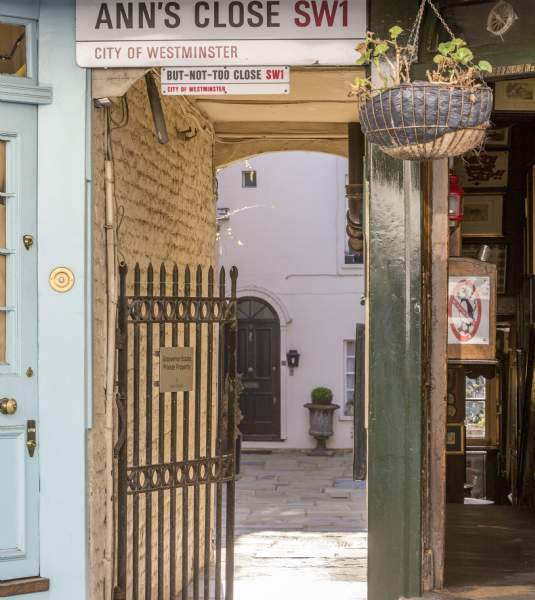
How to make your home stand out in a crowded market (The Telegraph)
"Be prepared," says Guy Meacock of Prime Purchase. "If you are selling a leasehold flat, get in touch with the management company - have three years of service charges and accounts lined up."
READ ARTICLE
Considering buying this summer? We look at how the market is faring in London and the country
Charlie Wells, managing director of Prime Purchase, and Guy Meacock, director and head of the London office, discuss the housing market in the country and London with tips for buyers looking to make a move this summer
READ ARTICLE
Heritage cities - why they continue to command a premium
Prime Purchase directors Guy Meacock and Lucy Worcester dive into the latest Savills Prime UK Residential report to explore the heritage cities of Westminster and Bath
READ ARTICLE
What's in store for Prime Central London in the second half of 2025?
It is a truism that many markets are sentiment-driven, perhaps none more so than the residential housing market.
READ ARTICLE
Why discretion is key in the £10m-plus London market
The glamorous world of high-end prime property has been in the spotlight recently with Netflix showcasing agents selling homes to wealthy buyers in London.
READ ARTICLE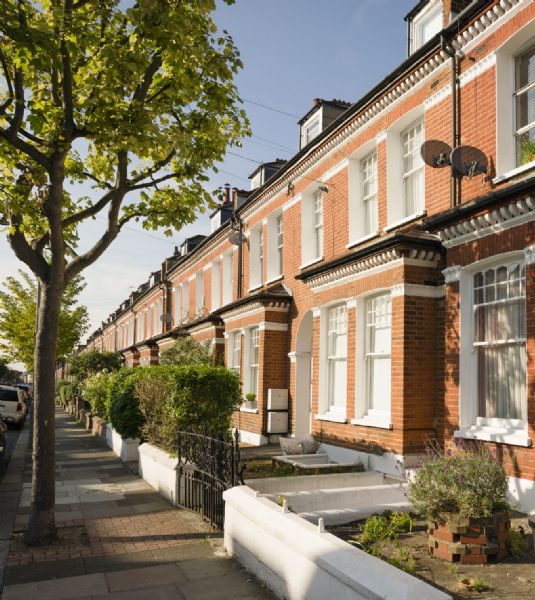
Game, set and match – Wimbledon Village
SW19 is best known as the home of tennis but there is much more to Wimbledon than that. Wimbledon Village is one of the best examples of an urban village, retaining its historic air and sense of separation, not least because it sits on a hill and has a
READ ARTICLE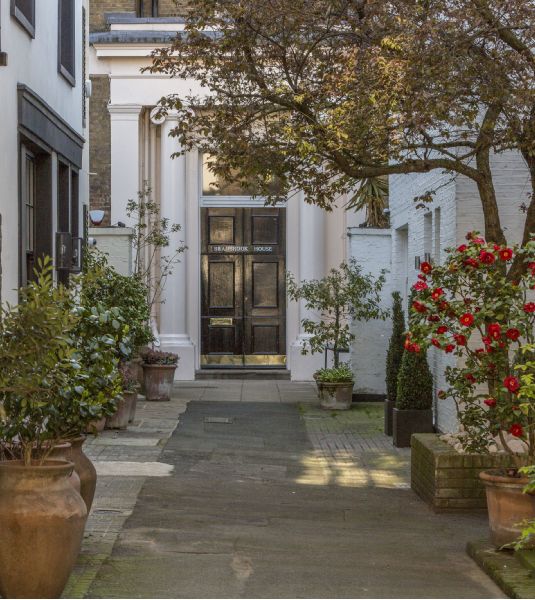
What a Trump victory could mean for the London property market
With Prime Minister Theresa May focused on a hard Brexit and Chancellor of the Exchequer Philip Hammond warning that there are two years of uncertainty ahead, it is not clear how things will play out for the London property market.
READ ARTICLE
London on strict diet to healthier, more balanced market
Those buying a second home or investment property may be keen to complete before 1 April to avoid paying an extra 3 percentage points on each tier in stamp duty.
READ ARTICLE