
back to insights & opinions

The prime central London (PCL) property market has endured a difficult decade. Successive tax changes, shifting political priorities, regulatory intervention and wider economic uncertainty have all left their mark. What was once one of the world's most sought-after residential markets has spent years grappling with headwinds that have gradually eroded confidence and activity.
Much of this can be traced back to government policy. For more than a decade, the market has approached every fiscal event with a degree of apprehension, never quite sure what new measure might emerge to further complicate property ownership or investment. With 17 housing ministers since 2010, policy inconsistency has become a defining feature of the housing landscape, leaving both buyers and sellers navigating an environment that often appears to lack long-term direction.
Yet, despite these challenges, there are compelling reasons to believe that PCL is nearing a turning point.
The drag of taxation
Few issues have had a greater impact on the market than stamp duty. Originally intended as a revenue-raising measure, it has increasingly become a barrier to mobility, discouraging transactions and making purchasers think twice before moving. Whether upsizing, downsizing, relocating or investing, buyers face a considerable upfront cost that frequently alters behaviour.
With estimates this week suggesting that the Exchequer will be down by more than £500 million in stamp duty receipts on property sales over £5m alone since the October 2024 Budget, the new Chancellor has plenty to think about. The Tories, keen to appeal to their lost sheep that jumped ship to Reform, made a big play of their proposals around property tax at their recent Conference. A trio of pledges were made to abolish stamp duty, repeal the so-called Mansion Tax, and remove Inheritance Tax on family homes – policies that seemed to strike a chord with many of our clients who have started wondering whether to delay their moving decisions in the hope that some of it at least might come true. While this may be many years away, if it ever happens at all, it does underline how malignant stamp duty is to market morale. A system focused more heavily on gains, disposal or some form of annual property taxation would arguably create far fewer distortions and encourage activity at the same time. Moreover, this is a system which many international clients are much more familiar and comfortable with.
For a clear sense of the compound negative impact of current policy, it is through the eyes of those same international buyers that the consequence is laid bare. London's appeal as a global city remains unquestioned, as overseas visitors continue to be drawn by its architecture, history, culture, education system and lifestyle. Many of our international clients, particularly from the United States, still view London as one of the most desirable places in the world to live and educate their children. However, while travellers to these shores remain enthusiastic, ownership has become considerably less attractive because of the tax burden associated with buying and holding property.
Developers face similar challenges. Rising costs, planning complexity and taxation have created a situation where many schemes simply do not stack up financially – in the words of Taylor Wimpey recently, the viability model for developing in the capital has become ‘fundamentally broken’. At a time when housing supply remains critically constrained, the economics of delivering new homes in London have become increasingly difficult.
Embryonic green shoots
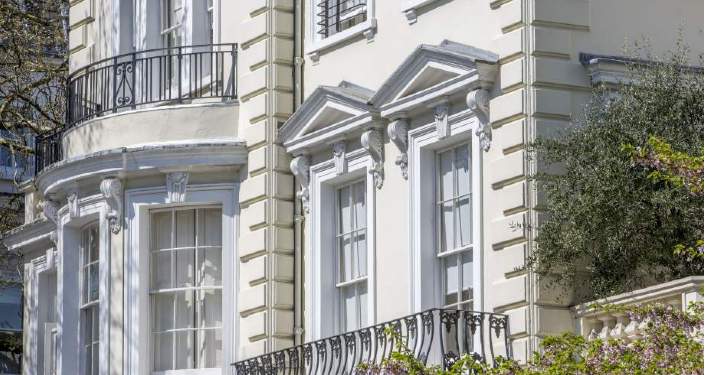
Against this doom-laden backdrop, it would be easy to conclude that buyers should continue to warm the fence – there are always more reasons to hold onto your money, the preppers amongst us perhaps emboldened to put it in a biscuit tin after the Defence Secretary’s advice last week. Yet there may be reasons to think differently.
Having done this job for more than 20 years, I can say with confidence that these are the best conditions I have ever seen, from my side of the negotiating fence.
Sentiment remains eggshell fragile, but this is precisely what creates opportunity. PCL values are significantly below previous highs, with prices roughly 26 per cent less than their 2014 peak; once inflation is factored in, you can almost double that figure – in supermarket terms, most properties would be plastered with those yellow ‘Reduced’ stickers signalling the immediate arrival of the Best Before Date – for blindly optimistic sellers their homes are thankfully not thrown into landfill, but there are most definitely swathes of things which have gone stale this year. On a general level though, buyers today have a level of choice and negotiating power that has been largely absent during my professional career.
Savills recently noted that price reductions remain a feature of the market as vendors increasingly accept current pricing realities, describing PCL as a buyers’ market – never was a truer word spoken. Across central London, agents are frequently encouraging offers and seeking engagement from serious purchasers, reflecting a market where negotiation remains not only possible, but expected, and where value can still be found.
The picture is not uniform, however, with demand strong for the rare, the unseen and the once-in-a-blue-moon. Fully refurbished, turnkey homes in highly sought-after locations continue to command significant premiums, particularly in family-focused neighbourhoods and at price points below £5m. Houses generally attract stronger demand than flats, with many buyers motivated by lifestyle needs rather than purely investment considerations. It is notable that British buyers have again come to the fore through London’s urban village belt, just as they did in the immediate aftermath of the pandemic, and despite a perpetual sense of everything becoming more expensive, there are some industries which continue to churn out some really high earners.
Politics, policy and uncertainty
The market's future trajectory will inevitably depend on political and economic developments. Recent fiscal statements have generated less speculation than previous Budgets, which is encouraging and mildly surprising in equal measure. If anything, what has been leaked from the Chancellor’s office has been broadly positive, namely the rejection of an idea to align CGT to income tax, as well as dismissing suggestions the ‘Mansion Tax’ net would drop to £1.5m. However, far greater concerns rightly remain, with news that the national debt pile has surpassed £3 trillion for the first time, neatly landing as the latest inflation measure ticked back up to 3.5 per cent - it seems almost certain rates will go up in early November as a result. It is likely there will be further measures that will stifle wealth creation in the Budget, highlighting the broader challenge for London in finding the right balance between taxation and competitiveness.
A thriving capital city is not simply a local issue; it is integral to the success of the wider UK economy. London has historically acted as a magnet for global talent, investment and entrepreneurship – perhaps those that are less ‘bloody-minded’ in John Healey’s words, more simply aspirational? When confidence weakens in London, it inevitably has implications elsewhere.
There is a growing perception among many high earners and internationally mobile individuals that the balance has shifted too far. People understandably expect public services and support networks to be funded, but they also want to feel rewarded for hard work, enterprise and success.
What should buyers do now?
For those considering a purchase, our advice remains straightforward: be opportunity-led.
The current market is unlikely to run away from buyers, particularly as we head into the quieter part of the seasonal cycle. Conditions remain relatively stable, stock levels are reasonable and there is still scope for negotiation for the most part. Waiting indefinitely for a material fall in prices can be a costly mistake, particularly when the right property becomes available.
Many purchasers spend years trying to time the market perfectly when their focus should be on identifying the right asset – I recall a client some years ago, waiting for more than six years to take the plunge, and missing multiple houses of quality during that time while he spent a gargantuan amount in rent, so determined was he to catch the falling knife just before it hit the floor. You can spend a lifetime waiting for perfect conditions; meanwhile, exceptional opportunities can pass by.
The most successful buyers are often those who recognise value before confidence returns. We saw this after the global financial crisis, when many waited for greater certainty while others quietly acquired outstanding properties at attractive prices. That lesson remains relevant today.
While confidence in PCL has undoubtedly been tested, London's fundamental appeal has not disappeared. It remains one of the world's great cities, offering a unique combination of attributes that few global destinations can match.
The market may not yet be fully recovered, but for motivated buyers with a long-term perspective, the conditions are arguably the most favourable they have been in many years. The opportunity is there for those prepared to act.
About the Author

More articles
by author
How to make your home stand out in a crowded market (The Telegraph)
"Be prepared," says Guy Meacock of Prime Purchase. "If you are selling a leasehold flat, get in touch with the management company - have three years of service charges and accounts lined up."
READ ARTICLE
Considering buying this summer? We look at how the market is faring in London and the country
Charlie Wells, managing director of Prime Purchase, and Guy Meacock, director and head of the London office, discuss the housing market in the country and London with tips for buyers looking to make a move this summer
READ ARTICLE
Heritage cities - why they continue to command a premium
Prime Purchase directors Guy Meacock and Lucy Worcester dive into the latest Savills Prime UK Residential report to explore the heritage cities of Westminster and Bath
READ ARTICLE
What's in store for Prime Central London in the second half of 2025?
It is a truism that many markets are sentiment-driven, perhaps none more so than the residential housing market.
READ ARTICLE
The enduring American love affair with London
There has been much press coverage regarding wealthy Americans flocking to London following the election of Donald Trump as President, but the popularity of UK property among American buyers has been consistently high for a while.
READ ARTICLE
Why discretion is key in the £10m-plus London market
The glamorous world of high-end prime property has been in the spotlight recently with Netflix showcasing agents selling homes to wealthy buyers in London.
READ ARTICLE
Game, set and match – Wimbledon Village
SW19 is best known as the home of tennis but there is much more to Wimbledon than that. Wimbledon Village is one of the best examples of an urban village, retaining its historic air and sense of separation, not least because it sits on a hill and has a
READ ARTICLE
What a Trump victory could mean for the London property market
With Prime Minister Theresa May focused on a hard Brexit and Chancellor of the Exchequer Philip Hammond warning that there are two years of uncertainty ahead, it is not clear how things will play out for the London property market.
READ ARTICLE
London on strict diet to healthier, more balanced market
Those buying a second home or investment property may be keen to complete before 1 April to avoid paying an extra 3 percentage points on each tier in stamp duty.
READ ARTICLE