
back to insights & opinions
This week, Russian President Vladimir Putin hosted a gathering of no less than 36 international leaders at the annual BRICS summit in Kazan.
The event was attended by Xi Jinping and Narendra Modi, two of the most influential people in global politics. Also in attendance was UN Secretary General Antonio Guterres, infuriating the West as he rubbed shoulders with a man branded a war criminal by the International Criminal Court. Among those present were several leaders whose countries consistently violate basic human rights in the pursuit of ideology.
On the opening day of the summit, Putin’s chest-beating was so loud it could practically be heard in Brussels and was only eclipsed by the sound of 15,000 North Korean troops goose-stepping their way through Siberia to the Western front, which reverberated across the pond as far as Washington DC.
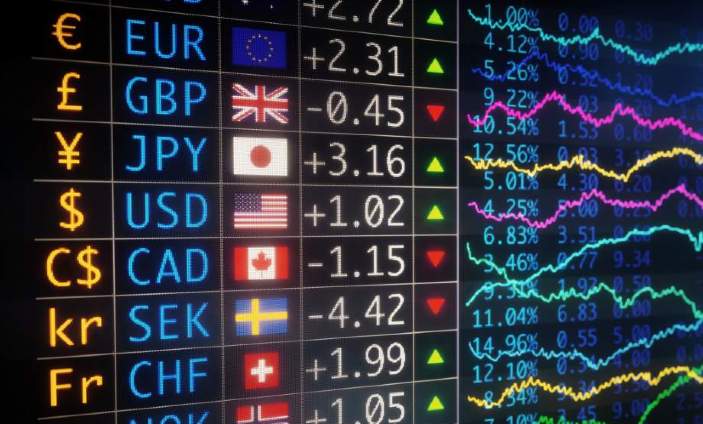
While the event is a clear show by Putin that the war in Ukraine has done little to isolate Russia from global trade, another subject quietly ranked top of the agenda –global de-dollarisation, a theme which has steadily been gaining traction over the last decade.
For years, the US dollar has been the go-to global currency both as a reserve currency for even America’s most ardent critics but also as a settling currency for oil, gold and pretty much all commodities traded globally. This reliance has given the US an edge not just economically on the world stage but also politically as a one-way sanctioning tool, rolled out most recently to bring Russia to heal on Ukraine, and Iran and North Korea on their long-term pursuit of nuclear weapons.
However, this weaponisation of the US dollar has lit the fuse on a quiet and yet inevitable shift away from its long-term hegemony as countries seek to limit their reliance and subjugation. China’s push towards a Petroyuan and the UAE’s pivot away from settling oil trades solely in dollars are part of a growing trend which is likely to continue to gain traction. The US dollar is so entrenched in the global economy that no one, aside from conspiracy theorists, is expecting an imminent collapse. But rather a long-term erosion, shifting the balance of power among countries and reshaping global markets, seems inevitable
It's notable that the value of obvious dollar hedges are rising, not least the price of gold which is scaling new highs although this is also likely due to a multitude of tail-wind risks from geopolitical tension and rate-cycle positioning to the forthcoming US election and its potential impact on US fiscal/deficit risk.
Another obvious hedge is international real estate. For years we have played on the fact that a strong dollar is positive for London real estate which is true but only on the basis that it’s essentially a contrarian trade and the purchaser assumes the cycle will reverse – such is the ebb and flow of cyclical currency markets. But what of a long-term shift, the end of a dollar super cycle which plays out over two or maybe three decades? JP Morgan recently suggested that the impact “would be most acutely felt in the US where de-dollarization would likely lead to a broad depreciation and underperformance of US financial assets versus the rest of the world. For US equities, outright and relative returns would be negatively impacted by divestment or reallocation away from US markets and a severe loss in confidence”.
Since the flash crash of 2022 when the pound/dollar hit $1.08, sterling has strengthened against the dollar until recently. Despite this rise, US buyers remain a driving force at the top end of the Prime Central London market. They are protected by international tax treaties so while they have one eye on the budget, the other is looking further down the track.
The UK has been consumed by the Budget for nearly six months. Some non-doms and private equity executives have left and the rest have packed their “shutes” while waiting to see if the plane catches fire before bailing out. We all hope for a middle ground that keeps the UK a balanced and fair economy that continues to attract investment and global talent and I for one believe that hard lobbying in recent months has increased the likelihood that sense will prevail.
But whatever happens in the Budget, it is small beer compared to other forces at play globally which will be shifting the tide of capital for generations to come and for reasons that far outweigh a few percentage points of tax.
About the Author
More articles
by author

Ciao! Arrivederci!
A draft 2027 Budget has been released in Rome by Giorgia Meloni’s Government
READ ARTICLE
With London's property boom in reverse, is there a buying opportunity? (The Financial Times)
“The divergence in values between central London and outer London has narrowed to the point where you don’t have to be ultra-wealthy to own a home in Chelsea,” says Ollie Marshall, director of Prime Purchase. “We’re essentially seeing a repatriation of central London assets that were held by international foreigners to UK buyers.”
READ ARTICLE
Time versus money
Ollie Marshall looks at whether the Dubai expatriate dream is all it's cracked up to be – and what it means for PCL property values
READ ARTICLE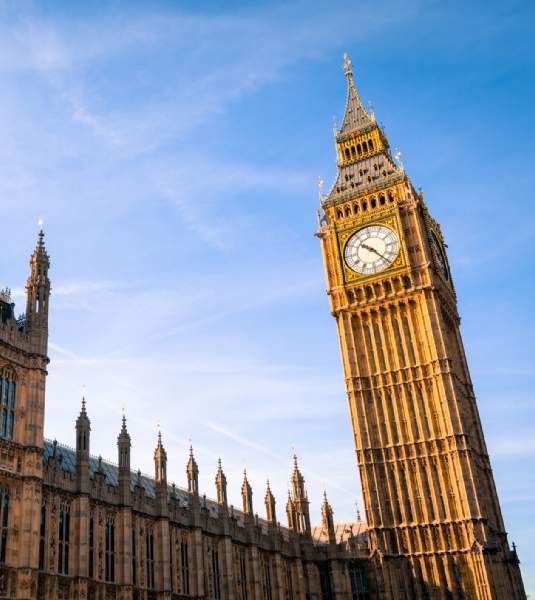
London's Burning
Back in 1666, in a bakery in Pudding Lane, a fire broke out, which destroyed no less than 80 per cent of the City of London.
READ ARTICLE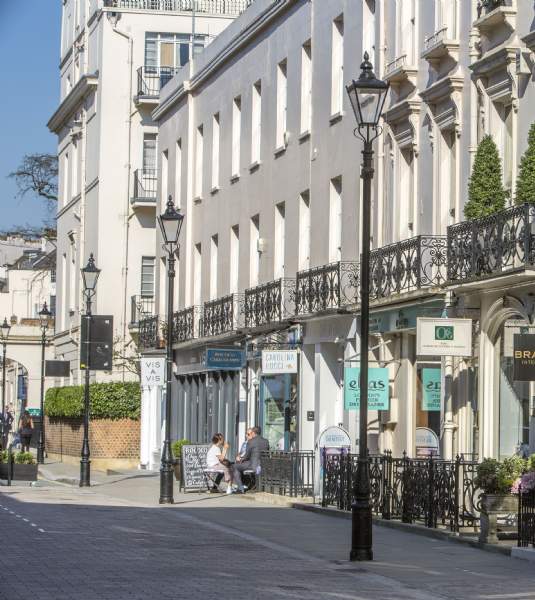
From funk to philanthropy
In 1991, the Red Hot Chili Peppers released ‘Give It Away’, an iconic rock anthem that became one of their defining hits. What most fans don’t realise is that despite the vaguely demonic video the song’s origins are deeply rooted in generosity.
READ ARTICLE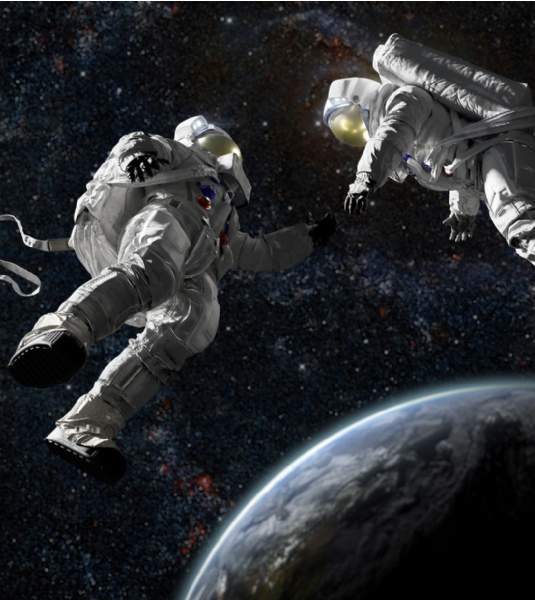
Kubrick's warning on AI
Back in 1968, when Stanley Kubrick’s 2001: A Space Odyssey first appeared in cinemas, he imagined that 2001 would see the dawn of commercial space travel, lunar colonies and sentient artificial intelligence. While we did eventually get the AI part and recently sent astronauts further than ever, interstellar travel still alludes us, although it will be a step closer after Elon Musk’s long-anticipated IPO of SpaceX later this year.
READ ARTICLE
Hold the line
In January 1944, Allied forces were stuck south of Rome, bogged down in the Italian winter. The Germans had spent months constructing the Gustav Line, a complex layered defensive system running through Monte Cassino, across rivers, mountains, and ruined villages. It was formidable and impenetrable as concrete bunkers coupled with interlocking fire from the strategic advantage of higher ground.
READ ARTICLE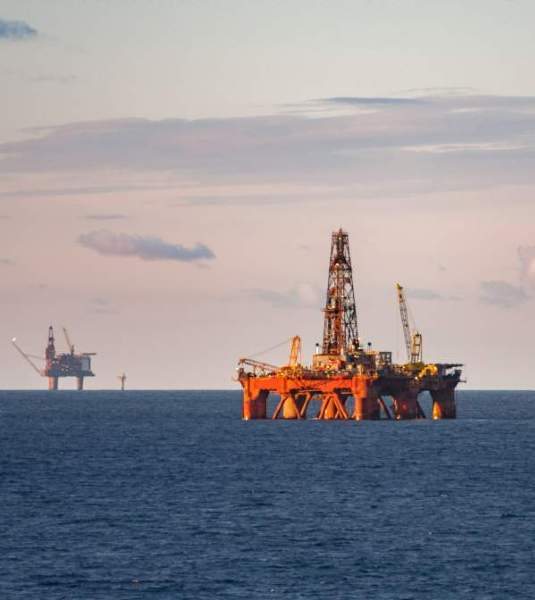
Crude awakenings – 'the fracas in Caracas'.
In the early hours of 3 January, and in a scene straight out of a Tom Clancy thriller, an elite US Delta Force team swept through Caracas seizing Venezuelan president Nicolás Maduro. As of last week, he now resides in the Metropolitan detention centre in New York alongside other current and former residents such as Sean ‘Diddy’ Combes, Ghislaine Maxwell, Sam Bankman Freud, the late Geoffrey Epstein and ironically El Chapo.
READ ARTICLE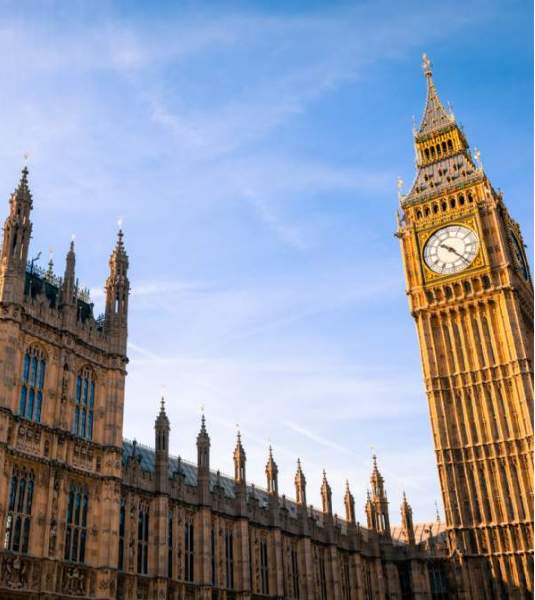
Putting the Budget into perspective.
On the night of 29 December 1940, Londoners went to bed knowing the Luftwaffe would come again. By dawn, St Paul’s Cathedral was shrouded in smoke and dust, the only thing visible through the flames that consumed much of the City.
READ ARTICLE
The anti-bubble.
In 1957, in a garage in Hawthorne, New Jersey, two entrepreneurial engineers named Alfred Fielding and Marc Chavannes came up with what they thought would be the next big thing in interior design. By sticking two plastic shower curtains together with pockets of air trapped within it they created a futuristic textured wallpaper. Unsurprisingly perhaps, it never caught on.
READ ARTICLE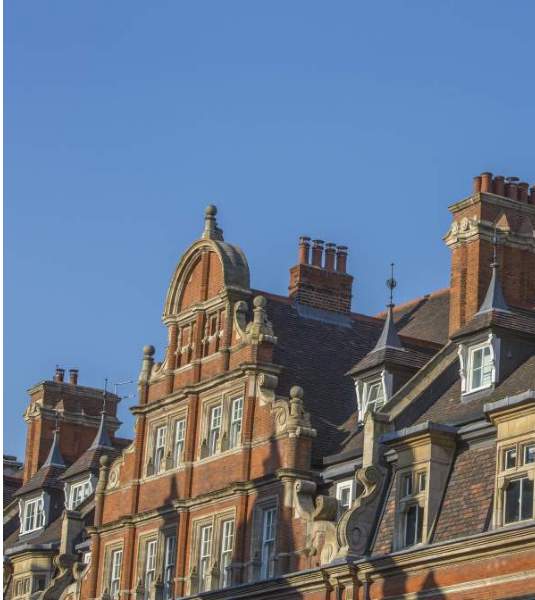
Advance to Mayfair: British buyers roll the dice in prime central London once again.
“Go to jail, go directly to jail, do not pass Go, do not collect £200” – that, more or less, is the message Prime Central London received from the Chancellor, with the Budget still two months away. Capital gains tax on primary residences? Perhaps. Replacing stamp duty with an annual levy? Possibly. Dusting off the old mansion tax? Don’t rule it out. The result, a two-month hiatus in transactions and, ironically, an even larger hole in Rachel Reeves’ already-stretched fiscal plans.
READ ARTICLE
Starboard!
Britain is setting sail on choppier seas, with the Government committing billions to bolster its naval firepower and the Royal Navy enjoying a renaissance.
READ ARTICLE
DOGEball
“If you're going to become true dodgeballers, then you've got to learn the five d's of dodgeball: dodge, duck, dip, dive and dodge!”
READ ARTICLE
The gift horse
In his letter to the Ephesians in 400AD, St Jerome wrote: ‘Noli equi dentes inspicere donati’ (never inspect the teeth of a given horse).
READ ARTICLE
Shaken not stirred
In 1956, Ian Fleming penned what has become arguably one the most iconic catchphrases on the silver screen.
READ ARTICLE
D-Day for the central banks
This month marks the 80th Anniversary of the D-Day invasion where we commemorate the bravery and sacrifice of those who fought during a pivotal moment in World War II.
READ ARTICLE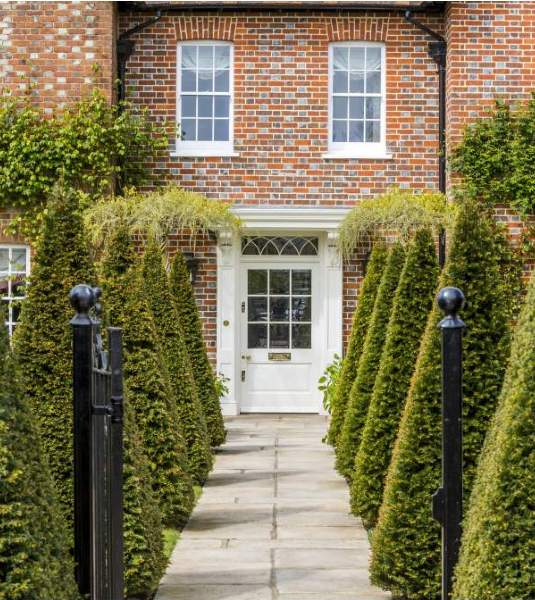
A Hedge too far
The humble hedge is a quintessentially British feature of our landscapes and gardens.
READ ARTICLE
Enter the Dragon
Back on 19 August 1973, Enter the Dragon, arguably the most popular martial arts film of all time, premiered in Los Angeles.
READ ARTICLE