
back to insights & opinions

Britain is setting sail on choppier seas, with the Government committing billions to bolster its naval firepower and the Royal Navy enjoying a renaissance. Trident upgrades, new frigates, and reinvestment in military infrastructure point to a more assertive stance on the world stage.
As the UK sharpens its naval defences, it’s worth remembering in maritime parlance, starboard means right, port left….and left always gives way to the right….which politically is exactly where the country seems to be drifting, regardless of who’s officially steering the ship.
Labour may currently be at the helm, but there are growing signs that the gravitational pull of the right is reshaping the nation’s course. Quiet discussions around a softening of its flagship pledge to scrap non-dom status, particularly concerning inheritance tax, is evidence that Labour is spooked and now appears to be to hedging its bets to stem the flow of capital abroad and appease the remaining restless upper class quietly eyeing the shores of the Arabian gulf.
Enter Reform UK, stage right, both literally and ideologically. With headline-grabbing proposals such as slashing income tax, abolishing stamp duty for UK residents, and offering “Britannia Visas” to attract global wealth. The Robin Hood approach of directly funnelling non-dom tax raises into the pockets of red wall voters is a clever one and shows Reform isn’t just campaigning, it’s setting a new tone, one that is reverberating through property markets, wealth planning firms, and the boardrooms of Mayfair and beyond.
While not immediate, the implications for prime central London (PCL) are huge. Political winds matter, and investors know it. Just the suggestion of friendlier tax policy toward wealth has already reignited murmurs of renewed demand in the £5 million-plus market segment. There has also been a recent surge of both private and institutional wealth targeting distressed residential opportunities at all levels and Land securities recent £3 billion pivot into residential is a further sign of this shift. If even a fraction of these reforms is enacted by Labour out of pressure or more likely a future right-wing coalition, the window for opportunistic buying could begin to close.
For now, PCL pricing remains subdued, a rare confluence of high interest rates, global caution, and domestic political transition. But make no mistake the tide is turning and savvy buyers may only have a year or two left to capitalise on what is a heavily discounted market where you can buy property at levels not seen since the global financial crisis.
While the next election appears far out and the UK currently flies a red flag on its mast it is clear the winds are changing and the deafening screams of ‘Starboard’ in the halls of Westminster are already forcing those on the left to change tack.
About the Author

More articles
by author

Ciao! Arrivederci!
A draft 2027 Budget has been released in Rome by Giorgia Meloni’s Government
READ ARTICLE
With London's property boom in reverse, is there a buying opportunity? (The Financial Times)
“The divergence in values between central London and outer London has narrowed to the point where you don’t have to be ultra-wealthy to own a home in Chelsea,” says Ollie Marshall, director of Prime Purchase. “We’re essentially seeing a repatriation of central London assets that were held by international foreigners to UK buyers.”
READ ARTICLE
Time versus money
Ollie Marshall looks at whether the Dubai expatriate dream is all it's cracked up to be – and what it means for PCL property values
READ ARTICLE
London's Burning
Back in 1666, in a bakery in Pudding Lane, a fire broke out, which destroyed no less than 80 per cent of the City of London.
READ ARTICLE
From funk to philanthropy
In 1991, the Red Hot Chili Peppers released ‘Give It Away’, an iconic rock anthem that became one of their defining hits. What most fans don’t realise is that despite the vaguely demonic video the song’s origins are deeply rooted in generosity.
READ ARTICLE
Kubrick's warning on AI
Back in 1968, when Stanley Kubrick’s 2001: A Space Odyssey first appeared in cinemas, he imagined that 2001 would see the dawn of commercial space travel, lunar colonies and sentient artificial intelligence. While we did eventually get the AI part and recently sent astronauts further than ever, interstellar travel still alludes us, although it will be a step closer after Elon Musk’s long-anticipated IPO of SpaceX later this year.
READ ARTICLE
Hold the line
In January 1944, Allied forces were stuck south of Rome, bogged down in the Italian winter. The Germans had spent months constructing the Gustav Line, a complex layered defensive system running through Monte Cassino, across rivers, mountains, and ruined villages. It was formidable and impenetrable as concrete bunkers coupled with interlocking fire from the strategic advantage of higher ground.
READ ARTICLE
Crude awakenings – 'the fracas in Caracas'.
In the early hours of 3 January, and in a scene straight out of a Tom Clancy thriller, an elite US Delta Force team swept through Caracas seizing Venezuelan president Nicolás Maduro. As of last week, he now resides in the Metropolitan detention centre in New York alongside other current and former residents such as Sean ‘Diddy’ Combes, Ghislaine Maxwell, Sam Bankman Freud, the late Geoffrey Epstein and ironically El Chapo.
READ ARTICLE
Putting the Budget into perspective.
On the night of 29 December 1940, Londoners went to bed knowing the Luftwaffe would come again. By dawn, St Paul’s Cathedral was shrouded in smoke and dust, the only thing visible through the flames that consumed much of the City.
READ ARTICLE
The anti-bubble.
In 1957, in a garage in Hawthorne, New Jersey, two entrepreneurial engineers named Alfred Fielding and Marc Chavannes came up with what they thought would be the next big thing in interior design. By sticking two plastic shower curtains together with pockets of air trapped within it they created a futuristic textured wallpaper. Unsurprisingly perhaps, it never caught on.
READ ARTICLE
Advance to Mayfair: British buyers roll the dice in prime central London once again.
“Go to jail, go directly to jail, do not pass Go, do not collect £200” – that, more or less, is the message Prime Central London received from the Chancellor, with the Budget still two months away. Capital gains tax on primary residences? Perhaps. Replacing stamp duty with an annual levy? Possibly. Dusting off the old mansion tax? Don’t rule it out. The result, a two-month hiatus in transactions and, ironically, an even larger hole in Rachel Reeves’ already-stretched fiscal plans.
READ ARTICLE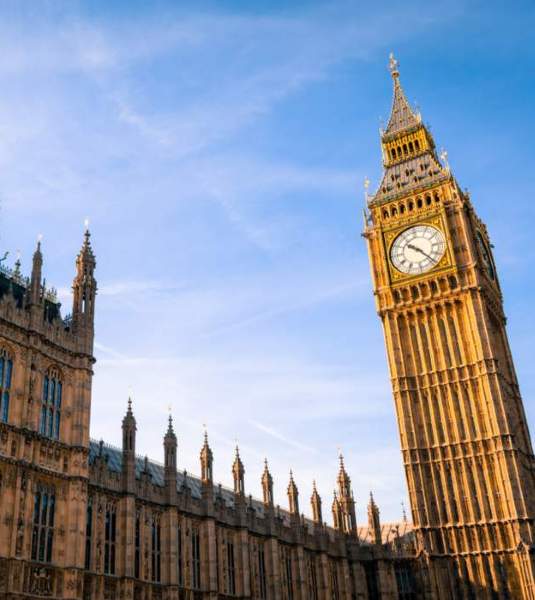
DOGEball
“If you're going to become true dodgeballers, then you've got to learn the five d's of dodgeball: dodge, duck, dip, dive and dodge!”
READ ARTICLE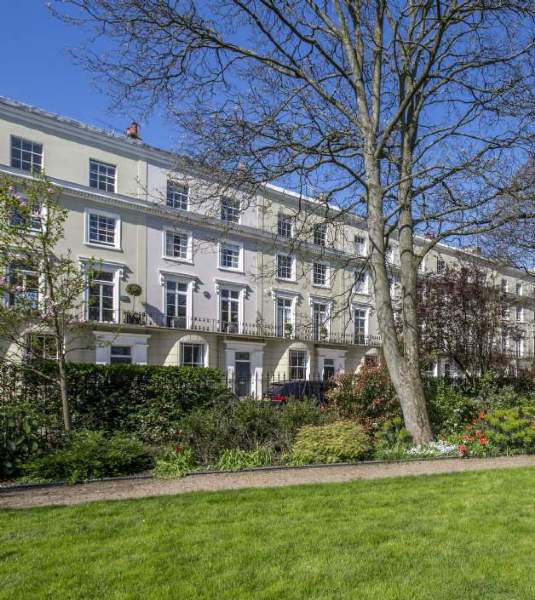
The gift horse
In his letter to the Ephesians in 400AD, St Jerome wrote: ‘Noli equi dentes inspicere donati’ (never inspect the teeth of a given horse).
READ ARTICLE
BRICS and mortar
This week, Russian President Vladimir Putin hosted a gathering of no less than 36 international leaders at the annual BRICS summit in Kazan.
READ ARTICLE
Shaken not stirred
In 1956, Ian Fleming penned what has become arguably one the most iconic catchphrases on the silver screen.
READ ARTICLE
D-Day for the central banks
This month marks the 80th Anniversary of the D-Day invasion where we commemorate the bravery and sacrifice of those who fought during a pivotal moment in World War II.
READ ARTICLE
A Hedge too far
The humble hedge is a quintessentially British feature of our landscapes and gardens.
READ ARTICLE
Enter the Dragon
Back on 19 August 1973, Enter the Dragon, arguably the most popular martial arts film of all time, premiered in Los Angeles.
READ ARTICLE