
back to insights & opinions
In 1991, the Red Hot Chili Peppers released Give It Away, an iconic rock anthem that became one of their defining hits. What most fans don’t realise is that despite the vaguely demonic video, the song’s origins are deeply rooted in generosity. Frontman Anthony Kiedis has often recounted how the lyrics were inspired by an act of selflessness from punk icon Nina Hagen, who once gifted him a beloved jacket with no expectation of anything in return, delivering one simple message: the more you give away, the more you ultimately receive.
This ethos of generosity has since taken on new dimensions, particularly in the world of finance in the form of philanthropy investing, an approach that blends social impact with financial returns, proving that giving it away doesn’t have to mean giving it up. This rapidly-growing sector is changing the way charitable foundations, HNW individuals, and institutional investors deploy capital.
Gone are the days when philanthropy was solely about writing cheques and hoping for the best. Today’s philanthropic investors are taking a far more strategic approach, ensuring their capital generates long-term impact while preserving and even growing their wealth. From green bonds to social impact funds, the sector is diversifying at pace, with more investors seeking opportunities that align with both their values and their balance sheets.
The global impact investing market is already worth over $1 trillion, with institutional investors and family offices increasingly shifting towards assets that generate both profit and purpose. Whether it’s affordable housing, renewable energy, or microfinance, philanthropy investing is now a serious financial discipline rather than just a charitable sideline.
One of the most compelling and perhaps unexpected opportunities in this space lies in prime central London residential property. While traditional buy-to-let investors are battered by increased taxation and regulatory tightening, charitable foundations find themselves in an enviable position. Thanks to tax exemptions, they can sidestep the higher rates of stamp duty that have stifled private investors, allowing them to acquire blue-chip assets at more favourable terms.
But it’s not just about avoiding taxes, it’s about returns. The PCL residential market, long considered a safe haven for global wealth, is in its 15th year of the longest bear market in living memory. Despite this, rental demand is soaring (one of the many un-intended consequences of punitive SDLT rates) and net yields for well-positioned assets as a result are climbing, making it an attractive proposition for foundations looking for diversification, capital preservation and steady income generation in one of the few defensive asset classes not flashing bubble risk.
But the point is this: without the higher stamp duty rates introduced in recent years, residential prices in central London would likely be at least 30 per cent higher than today. This means that charities, by virtue of being exempt from these taxes, can acquire real estate that has a fundamentally higher intrinsic value, one that is only discounted due to a tax they simply don’t have to pay. In essence, they can purchase prime assets at a built-in discount created by a cost burden that doesn’t apply to them.
Philanthropy investing isn’t just a moral choice, it’s a strategic one. Just as the Red Hot Chili Peppers taught us that generosity begets abundance, the modern investment landscape is proving that doing good and doing well are not mutually exclusive.
For those looking to make an impact while securing stable returns, PCL property offers these foundations a combination of opportunism and discounted income producing safe haven, high yielding, hard assets in a world of growing uncertainty. And in a world where wealth is increasingly measured by influence and impact rather than just accumulation, perhaps the Peppers had it right all along….sometimes, the best way to gain is to give it away.
About the Author

More articles
by author

Ciao! Arrivederci!
A draft 2027 Budget has been released in Rome by Giorgia Meloni’s Government
READ ARTICLE
With London's property boom in reverse, is there a buying opportunity? (The Financial Times)
“The divergence in values between central London and outer London has narrowed to the point where you don’t have to be ultra-wealthy to own a home in Chelsea,” says Ollie Marshall, director of Prime Purchase. “We’re essentially seeing a repatriation of central London assets that were held by international foreigners to UK buyers.”
READ ARTICLE
Time versus money
Ollie Marshall looks at whether the Dubai expatriate dream is all it's cracked up to be – and what it means for PCL property values
READ ARTICLE
London's Burning
Back in 1666, in a bakery in Pudding Lane, a fire broke out, which destroyed no less than 80 per cent of the City of London.
READ ARTICLE
Kubrick's warning on AI
Back in 1968, when Stanley Kubrick’s 2001: A Space Odyssey first appeared in cinemas, he imagined that 2001 would see the dawn of commercial space travel, lunar colonies and sentient artificial intelligence. While we did eventually get the AI part and recently sent astronauts further than ever, interstellar travel still alludes us, although it will be a step closer after Elon Musk’s long-anticipated IPO of SpaceX later this year.
READ ARTICLE
Hold the line
In January 1944, Allied forces were stuck south of Rome, bogged down in the Italian winter. The Germans had spent months constructing the Gustav Line, a complex layered defensive system running through Monte Cassino, across rivers, mountains, and ruined villages. It was formidable and impenetrable as concrete bunkers coupled with interlocking fire from the strategic advantage of higher ground.
READ ARTICLE
Crude awakenings – 'the fracas in Caracas'.
In the early hours of 3 January, and in a scene straight out of a Tom Clancy thriller, an elite US Delta Force team swept through Caracas seizing Venezuelan president Nicolás Maduro. As of last week, he now resides in the Metropolitan detention centre in New York alongside other current and former residents such as Sean ‘Diddy’ Combes, Ghislaine Maxwell, Sam Bankman Freud, the late Geoffrey Epstein and ironically El Chapo.
READ ARTICLE
Putting the Budget into perspective.
On the night of 29 December 1940, Londoners went to bed knowing the Luftwaffe would come again. By dawn, St Paul’s Cathedral was shrouded in smoke and dust, the only thing visible through the flames that consumed much of the City.
READ ARTICLE
The anti-bubble.
In 1957, in a garage in Hawthorne, New Jersey, two entrepreneurial engineers named Alfred Fielding and Marc Chavannes came up with what they thought would be the next big thing in interior design. By sticking two plastic shower curtains together with pockets of air trapped within it they created a futuristic textured wallpaper. Unsurprisingly perhaps, it never caught on.
READ ARTICLE
Advance to Mayfair: British buyers roll the dice in prime central London once again.
“Go to jail, go directly to jail, do not pass Go, do not collect £200” – that, more or less, is the message Prime Central London received from the Chancellor, with the Budget still two months away. Capital gains tax on primary residences? Perhaps. Replacing stamp duty with an annual levy? Possibly. Dusting off the old mansion tax? Don’t rule it out. The result, a two-month hiatus in transactions and, ironically, an even larger hole in Rachel Reeves’ already-stretched fiscal plans.
READ ARTICLE
Starboard!
Britain is setting sail on choppier seas, with the Government committing billions to bolster its naval firepower and the Royal Navy enjoying a renaissance.
READ ARTICLE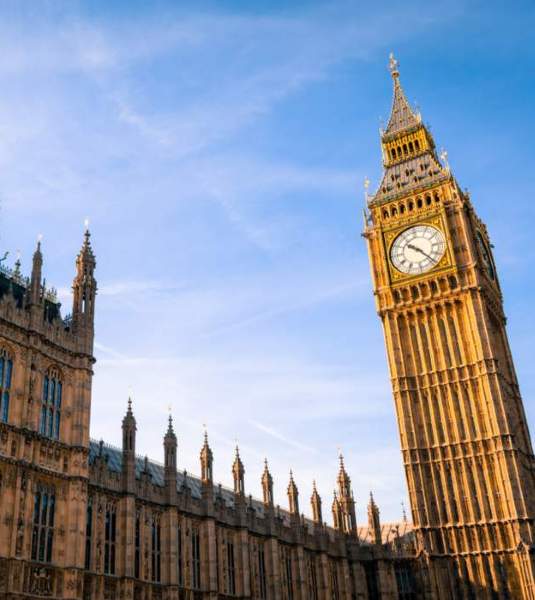
DOGEball
“If you're going to become true dodgeballers, then you've got to learn the five d's of dodgeball: dodge, duck, dip, dive and dodge!”
READ ARTICLE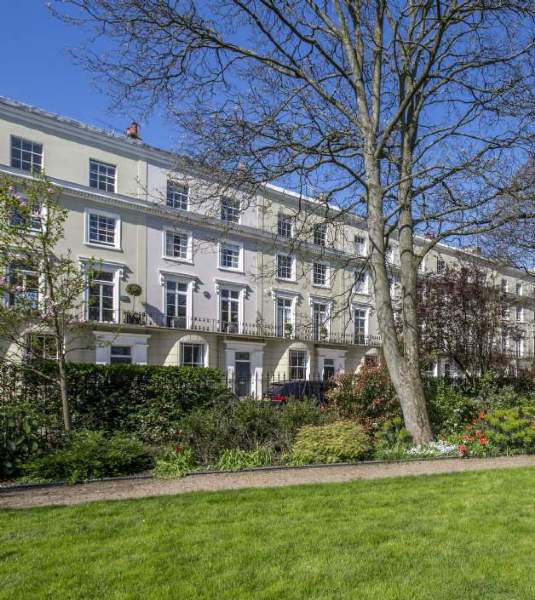
The gift horse
In his letter to the Ephesians in 400AD, St Jerome wrote: ‘Noli equi dentes inspicere donati’ (never inspect the teeth of a given horse).
READ ARTICLE
BRICS and mortar
This week, Russian President Vladimir Putin hosted a gathering of no less than 36 international leaders at the annual BRICS summit in Kazan.
READ ARTICLE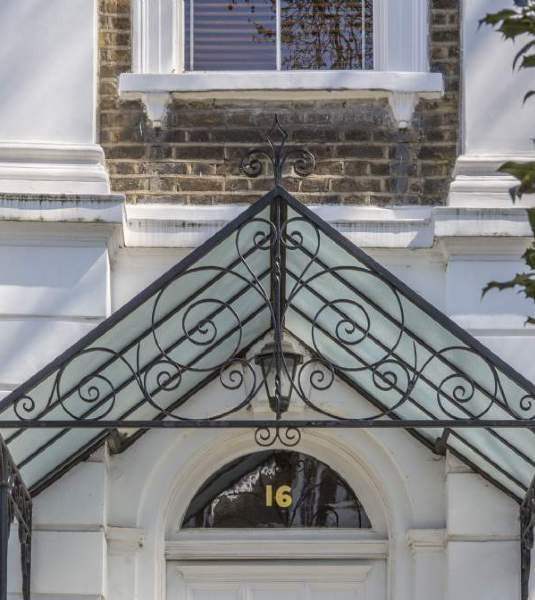
Shaken not stirred
In 1956, Ian Fleming penned what has become arguably one the most iconic catchphrases on the silver screen.
READ ARTICLE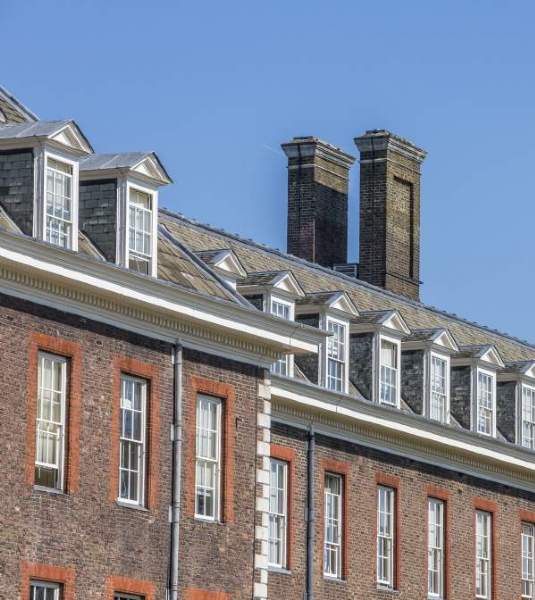
D-Day for the central banks
This month marks the 80th Anniversary of the D-Day invasion where we commemorate the bravery and sacrifice of those who fought during a pivotal moment in World War II.
READ ARTICLE
A Hedge too far
The humble hedge is a quintessentially British feature of our landscapes and gardens.
READ ARTICLE
Enter the Dragon
Back on 19 August 1973, Enter the Dragon, arguably the most popular martial arts film of all time, premiered in Los Angeles.
READ ARTICLE